

Black Tie Time: How to Design the Perfect Dinner Suit
A black tie event may only come along once or twice a year, but it’s the ultimate sartorial playground, and a measure of a man’s commitment to classic tailoring traditions. A quality dinner jacket is the sort of garment that, if purchased with foresight and conviction, can maintain its relevance for a decade or more. With that in mind, here are our tips on designing the ideal dinner jacket.
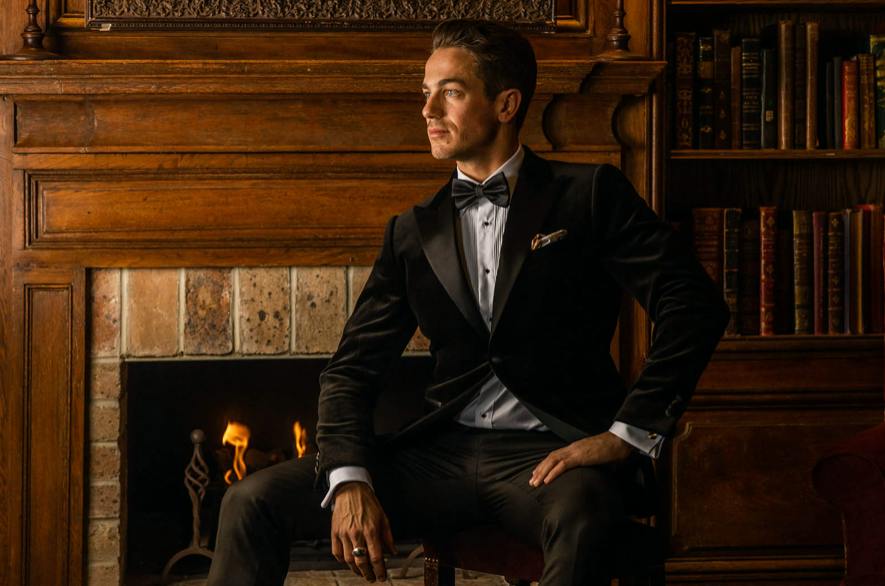
Fabric Ordinarily a dinner suit will be crafted from 100% wool, and preferably Woolmark certified Australian Merino wool, which is of a particularly high standard. As well as being timeless (so it won’t date before the next big event) and formal, it's durable (for black tie dance floors and long stretches in the closet in between events, if taken care of).
In terms of colour, you’ll most commonly opt for black. However a dark navy (or ‘midnight blue’) can cut an equally swashbuckling figure, and could even be considered more traditional - when Edward VII opted to ditch his formal tails for a Savile Row crafted smoking jacket and matching trousers (by Henry Poole & Co, still around) the colour was in fact blue.
(This style was then adopted by influential members of the Tuxedo Club in New York City, many of whom were customers of Henry Poole. The term ‘tuxedo’ is the Americanism for ‘dinner suit’).
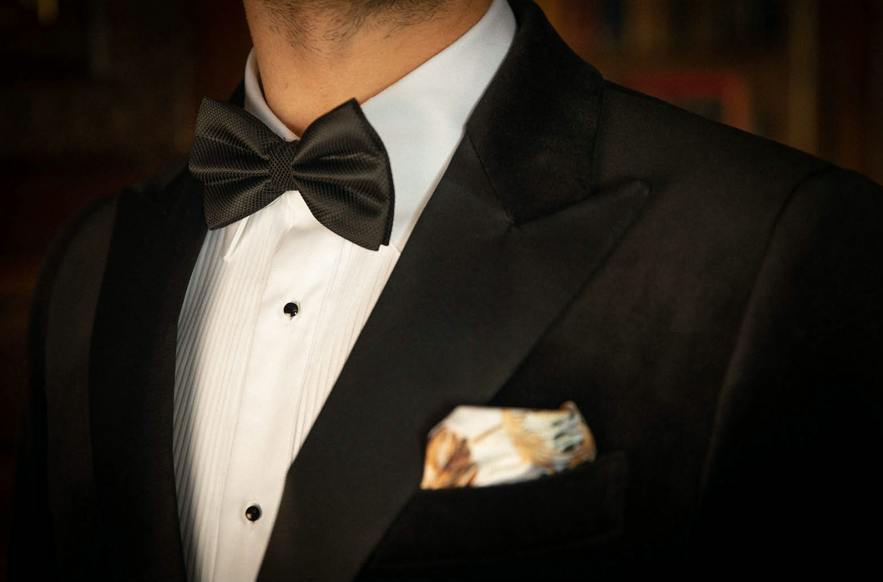
Lapel Unlike a normal business suit, you’ve got some more freedom to have some fun with a dinner jacket. A peak lapel or a shawl lapel are the most popular options, and are equally timeless options. A peak lapel will accentuate shoulders and shape (great for those who want to draw attention to their shoulder width) but a shawl lapel will suit those muscular and taller fellows who want to play down their shapeliness.
And you can even match it up with contrasting lapel fabric - a satin lapel on a wool suit will add depth and sophistication to a formal jacket, setting it up as a formal-occasion garment. If it’s a navy wool suit, a black lapel is completely acceptable (though a blue lapel on a black suit is not). And, while it’s got nothing to do with your lapels, you can also add a satin stripe down the trouser for an extra formal and stylish lower-body game.
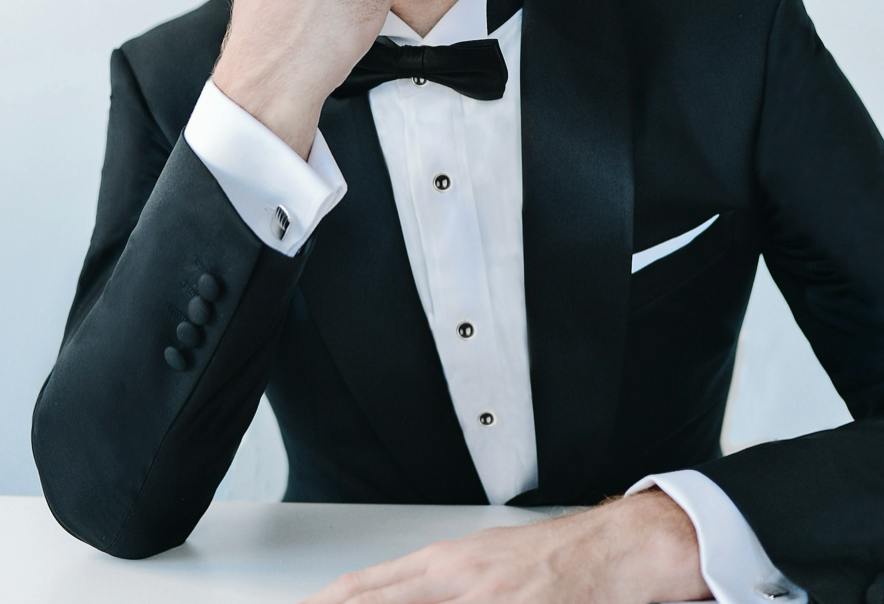
Buttons The buttons on your dinner suit should match the fabric and colour of the lapels on your suit, whether that’s black satin or blue satin. Simple enough.
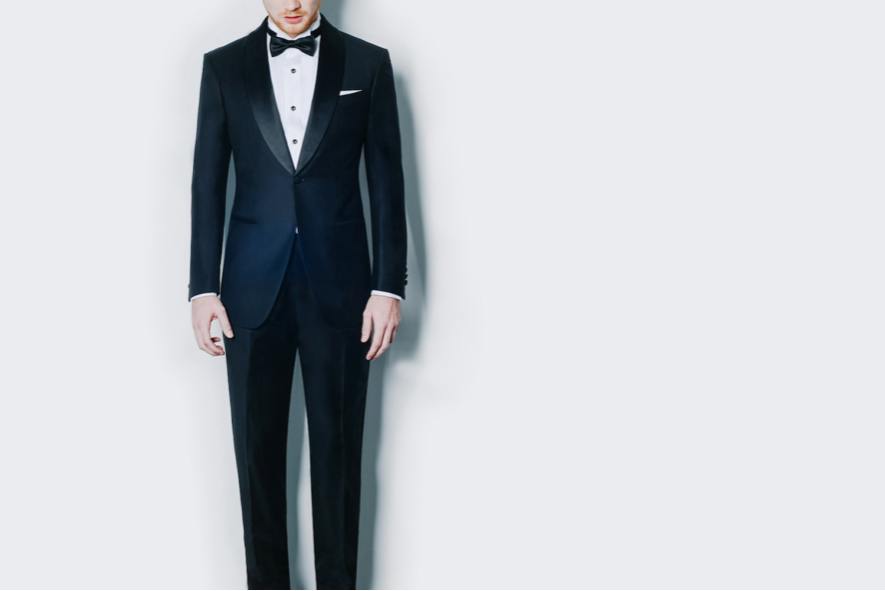
Pockets Stick to a ‘Besom’ (or welt) pocket, the most formal and elegant.
Extras While we ordinarily suggest that a half-canvas suit is a good balance between ensuring air-flow and retaining structure, a dinner suit is one opportunity that may be better to opt for a full-canvas construction, meaning the inner layer of the suit continues all the way to the bottom of the jacket. This will help retain structure and form, and while it’s not essential, it’s a nice touch on your go-to jacket.
Considering the formality of the suit it’s also the time to go full out on the fun stuff - why not add a monogram or initials on the inside breast pocket? It’ll flash your black tie credentials when you take it off, and help ensure nobody wants to pinch your favourite jacket at the end of the evening. An individual lining, not visible when wearing, will also add some personality and intrigue to the garment.
---